
Bio
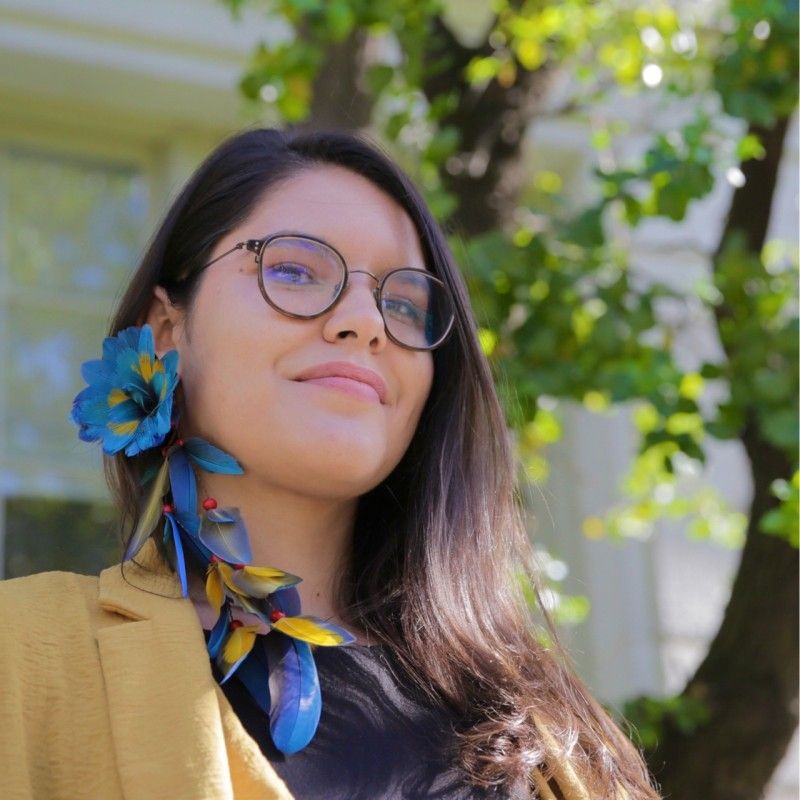
Born and raised in the Amazon rainforest, Maria Astolfi is a bioengineer building technologies at the intersection of synthetic biology, biodiversity, and global public health. She is currently a Ph.D. candidate in Bioengineering at UC Berkeley in the laboratory of Prof. Jay Keasling, where she develops AI-guided and automated platforms to enhance microbial production of biodiversity-derived pharmaceuticals. Her research focuses on QS-21, a potent vaccine adjuvant extracted from Quillaja saponaria (Küllay, soapbark tree) and used in the world’s first approved malaria vaccine. Her goal is to replace extractive supply chains from threatened forests with sustainable microbial production to expand access to life-saving vaccines.
Maria previously worked at Ginkgo Bioworks using its biofoundry to scale engineered microbes for industrial applications, and co-founded the first synthetic biology laboratory in the Amazonian region of Brazil. She is also a Fellow at the Indigenous Futures Institute at UC San Diego, where she worked with Prof. Keolu Fox (Kānaka Maoli) on ethical bioeconomy frameworks with Indigenous Peoples and Local Communities. Through the CEND Fellowship, Maria is advancing initiatives for equitable benefit-sharing around QS-21 with Chilean collaborators and Mapuche communities connected to the stewardship of Quillaja saponaria.