
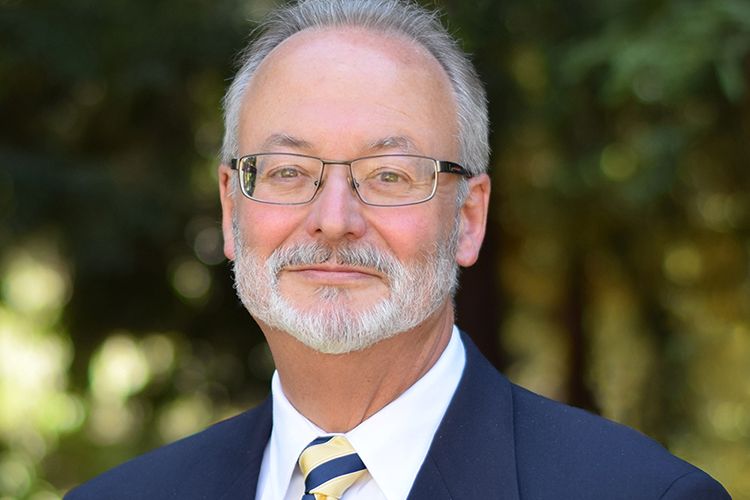
Bio
J. Keith Gilless joined the faculty of the University of California, Berkeley, as a professor of forest economics in 1983, and is a member of the faculty of both the Department of Environmental Science, Policy, and Management and the Department of Agricultural and Resource Economics. He served as Dean of Berkeley’s College of Natural Resources from 2007 to 2018, and retired from active professorial status in 2020. He is currently on recall serving as the Interim Director of the University and Jepson Herbaria and continues to serve the College as Co-Director of its Beahrs Environmental Leadership Program.
Gilless currently serves in the Academic Senate as the Co-Chair of Berkeley's Committee on Faculty Welfare, as a member of Berkeley's Divisional Council, and as a member of the Systemwide Health Care Task Force, and previously in a variety of roles, including as Secretary of the Berkeley Division. He also served the campus as as President of the Board of Directors of the Berkeley Faculty Club from 2023-2025.
Off campus, Gilless served from 2013 to 2024 as Chair of the California Board of Forestry and Fire Protection, and as the founding Co-Chair of the Board's Joint Institute for Wood Products Innovation from 2019-2024. Under his leadership, the Board has engaged in substantive revisions to the portions of the California Public Regulatory Code dealing with protection of watercourses, fire safety-related land use planning, non-industrial forest management plans, etc., and promulgated emergency rules to allow the public to quickly address with problems such as tree mortality resulting from drought and fire. Gilless also served for two terms on the US Department of Agriculture’s Forest Research Advisory Council.
Gilless research encompasses structure survival in large urban-wildland conflagrations, simulation modeling of fire behavior and initial attack on wildland fire, effects of climate change on fire management, public engagement in the development of Community Wildfire Protection Plans, natural hazards impacts and planning, the economic impacts of changes in USFS harvest levels, competition for woody biomass between the paper and biofuels sectors, long-term forecasting of prices and regional growth in the pulp and paper sector, and forest harvest scheduling. He is the co-author of two textbooks on forest resource management and economics.